

The human machine economy: smart data... better jobs?
🎧Listen to this article:
English
Spanish
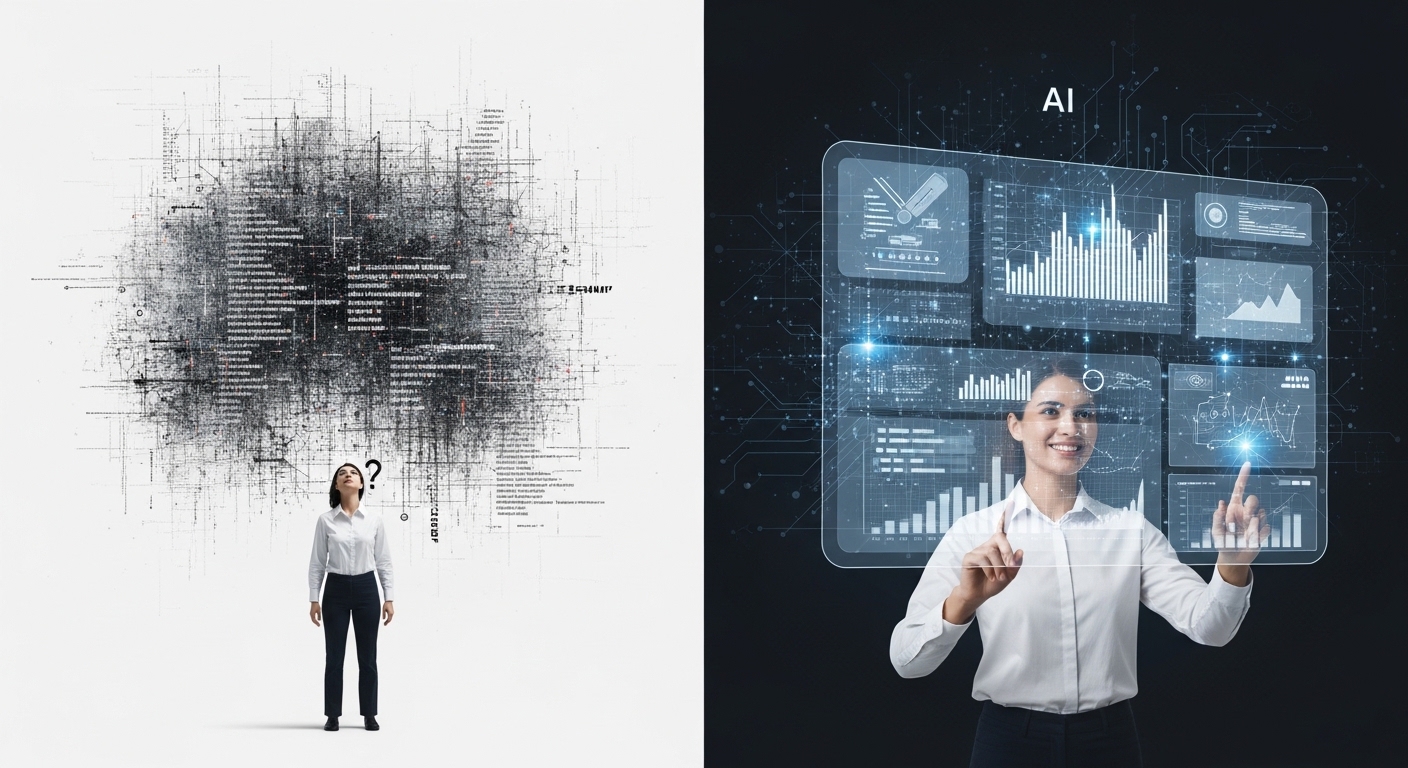
Our (human) participation in the economy of the (near) future presents us with two paths. One in which we are mere observants and beneficiaries of work made by bots enhanced with artificial general AI. Another where we somehow tame this technology to help us transform fast processed data in tasks that make us feel still relevant and productive.
Two paths for human participation
It is not the first time we have feared technology will take our jobs and put an end to the traditional economic principles we have been using since the inception of Capitalism theory at the end of the 18th century. Before the transition from mercantilism to the industrial revolution, technologies took much longer, not only to be invented, but to be implemented. For millennia, farmers relied on oxen and horses to pull wooden, then iron, plows. It took almost until mid-20th century for the tractor to really take over by proving more efficient than animals.
Are we the oxen of the 21st century?
Are we the oxen of the 21st century? The "good thing" about oxen is that they did not protest and destroy the tractor that replaced them. If anything, they were likely happier in their pastures when not working. But we, humans, need to feel relevant. Important. Productive. Essential. Irreplaceable.
The first real reaction against being replaced by technology happened back in the beginning of the 19th century when British workers reacted to the "encroachment" of machinery that de-skilled their labor, reduced wages, and concentrated power in the hands of factory owners, according to research done by Google Gemini, the AI I used to help me write this article (not to write it for me, yet). The disruption caused by "Luddites" as they were called (more about modern Luddites below) forced the British to respond with brutal repression, making machine-sabotage a capital offense and executing or transporting many Luddites to Australia.
The future of employment?
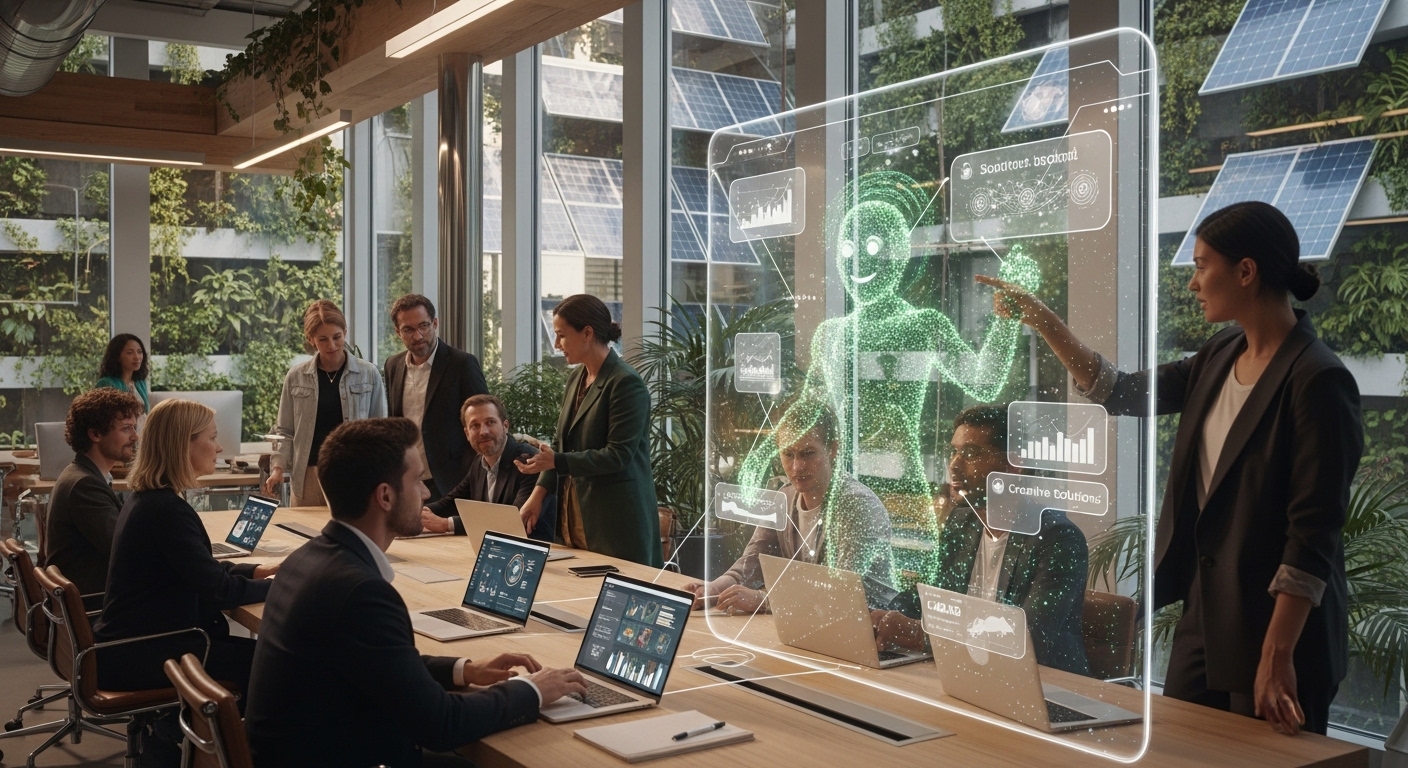
Yes, we have Luddites in the 21st century. And they are the product of "labor uncertainty," the idea that it is harder to know what knowledge or skills will be still relevant in 5 years. Although many wrongly see modern Luddites as technologically backward, they prefer to be seen as skeptics of industrialization, heavily concerned about artificial intelligence (AI) and the automation of labor.
Much is being written today about how AI will help, better than replace workers. Concepts like "human-machine hybrid economy," "robotic precision performance," "human-AI partnerships," and "enhanced human capabilities" keep popping in economic literature attempting to conceptualize the emerging collaboration with technology, especially with AI. Aruna Ranganathan and Xingqi Maggie Ye discovered, according to their in-progress research (Harvard Business Review, February of 2026), that "AI tools didn't reduce work, they consistently intensified it."
In their eight-month study of how generative AI changed work habits at a U.S.-based technology company with about 200 employees, they found that employees worked at a faster pace, took on a broader scope of tasks, and extended work into more hours of the day, often without being asked to do so. According to the authors, the company did not mandate AI use though it did offer enterprise subscriptions to commercially available AI tools. "Workers did more because AI made 'doing more' feel possible, accessible, and in many cases intrinsically rewarding."
What the data shows
An analysis by the Center for the New Economy and Society, "Matching Talent to the Jobs of Tomorrow" explains how employment services can use technology to better match jobs with talent. The study shows that by 2030, more than 20% of jobs are expected to transform due to advances in digital technology, demographic shifts and economic disruption. This is already reshaping how talent is found, trained and deployed, requiring new strategies to ensure alignment between skills and opportunities.
Are there still resumes with descriptors like "proficient in Microsoft Word and PowerPoint"? Unlikely. As more entrepreneurs find ways to implement their own understanding of tools provided by AI, they are also expecting that their new employees bring additional knowledge in their use of AI tools. Yes, more small businesses are relying on AI to serve as assistants, but that should not be the goal.
According to recent U.S. Bureau of Labor Statistics data, there is a paradoxical situation where jobs are simultaneously scarce and abundant, depending on industry and skill requirements. This demand-supply paradox, also examined by Fortune and economic researchers, highlights how traditional entry-level positions are increasingly automated while high-skill augmented roles remain unfilled. The global market for human augmentation technologies is projected to reach US$1.39 trillion by 2034, driven by organizations seeking to address these labor mismatches through enhanced human capabilities.
The same research shows that AI doesn't consistently excel in pure creative problem-solving compared to humans, human-AI collaborative teams demonstrate superior strategic viability, financial value and overall quality when solving complex, multi-dimensional problems. Recent Harvard Business School and Rice University studies distinguish between bounded strategy, where AI excels in tasks such as pricing optimization and logistics coordination, and creative ideation, where the evidence remains mixed but human-AI partnerships show the greatest promise.
Watching videos of perfectly coordinated robots doing kung-fu in China should not concern us, yet. If these highly efficient machines end up being the oxen of our fields and factories, we may be optimistic that a future of human leisure is at hand. AI is not thinking for us, it is doing for us. So, the human-machine economy should bring us better data to create better human jobs. We'll see.
Verified Sources
Ranganathan, Aruna, and Xingqi Maggie Ye. "AI Doesn't Reduce Work. It Intensifies It."Harvard Business Review, February 2026. Available at:https://hbr.org/2026/02/ai-doesnt-reduce-work-it-intensifies-it
EY. "How Emerging Technologies Are Enabling the Human-Machine Hybrid Economy."EY Megatrends. Available at:https://www.ey.com/en_gl/megatrends/how-emerging-technologies-are-enabling-the-human-machine-hybrid-economy
World Economic Forum. "Technologies Converging to Create New Opportunities for Business."WEF Stories, June 2025. Available at:https://www.weforum.org/stories/2025/06/technologies-converging-to-create-new-opportunities-for-business/
World Economic Forum. "Smart Data, Better Jobs."WEF Stories, May 2025. Available at:https://www.weforum.org/stories/2025/05/smart-data-better-jobs-technology-labour-markets/
World Economic Forum. "Our Centres: Centre for the New Economy and Society."Annual Report 2023-2024. Available at:https://www.weforum.org/publications/annual-report-2023-2024/in-full/our-centres-33ebb5a013/
The Conversation. "What's a Luddite? An Expert on Technology and Society Explains." Available at:https://theconversation.com/whats-a-luddite-an-expert-on-technology-and-society-explains-203653
🧭 Ready to go deeper?
Explore how creativity, agency, and human direction remain essential in the age of AI in this article:In the Age of Enhanced Creativity