Vibe Coding: How Anyone Can Build Their Dreams Today
🎧 Listen to this article:
English
Spanish
For decades, building something in the digital world meant learning a secret language first. Today, that wall is falling. With vibe coding, plain everyday words and a clear heart are enough to start building—opening a door that used to belong only to a few.
Speaking a Dream Into Existence
Imagine if only the people who knew how to weave canvas and grind pigments from stones were allowed to paint. Millions of colors, stories, and quiet masterpieces would never have reached the world.
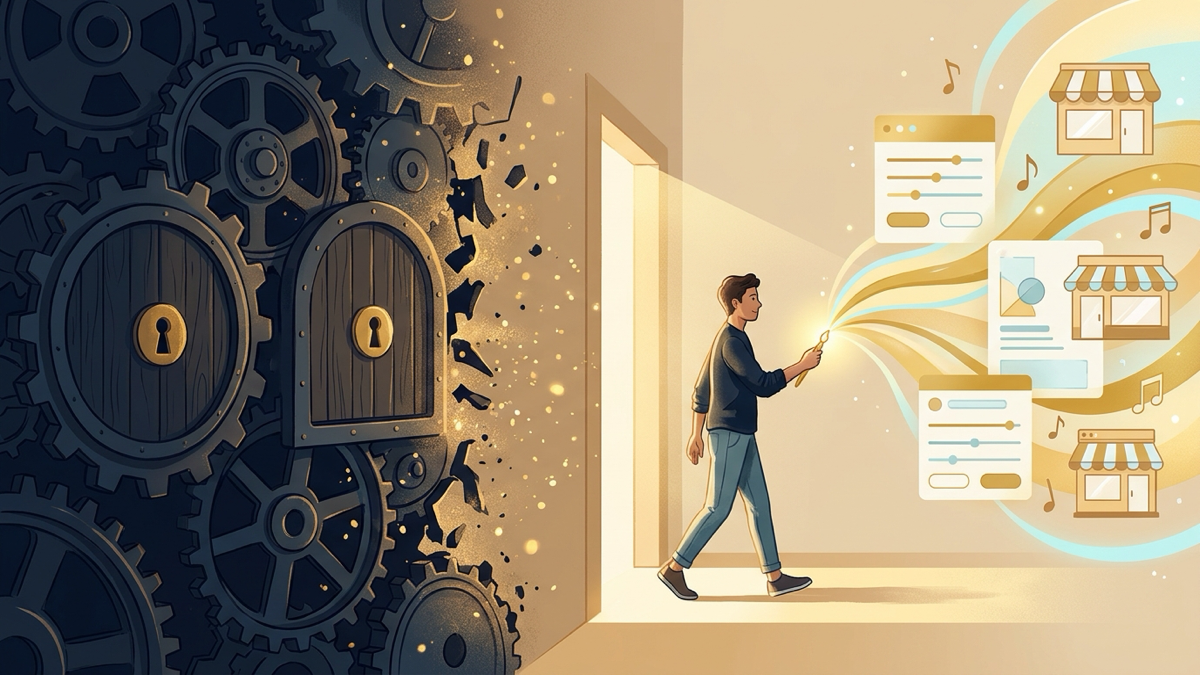
For years, software lived behind a wall much like that. You could know your neighborhood deeply, understand a real need, or carry a bright idea for a business—yet remain locked outside unless you spent years memorizing computer commands.
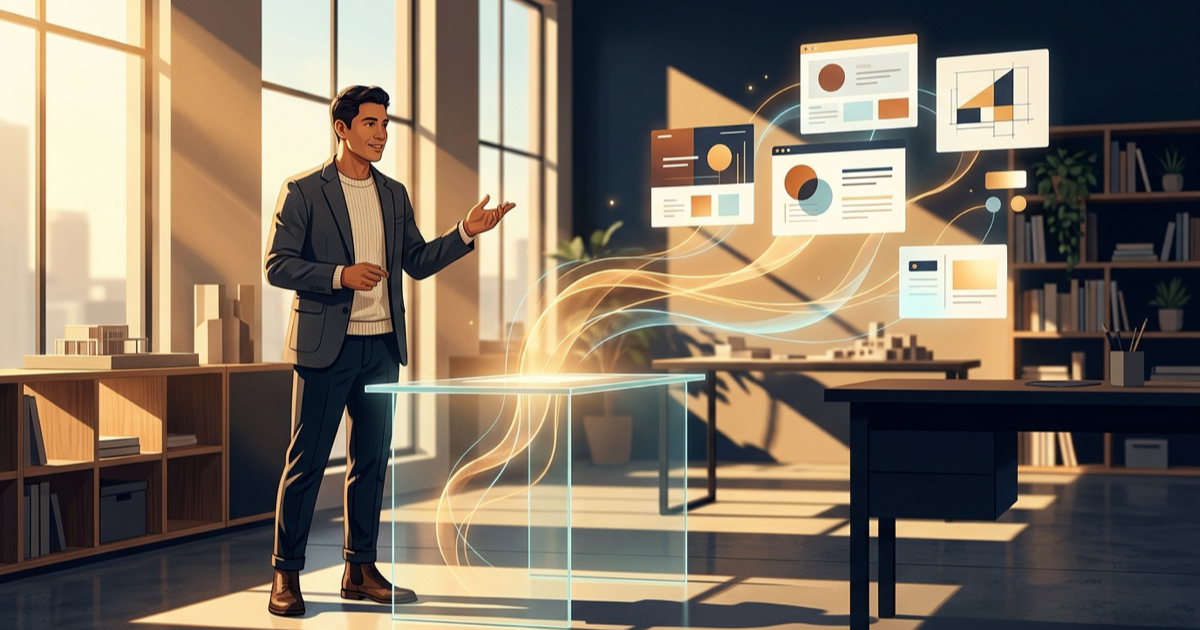
In early 2025, AI researcher Andrej Karpathy gave a simple name to a new way of creating: "vibe coding." Instead of typing technical instructions line by line, you describe what you want in everyday conversation. Yet AI does not produce magic or polished results on the first try: without clear human context about what you want to build and how it should feel, its first drafts are often clumsy and disorganized. Quality only appears when you look at what shows up on the screen, give clearer context, point out what feels right or off, and refine it step by step with human judgment.
When the Distance Between a Dream and Reality Disappears
Something quiet and extraordinary happens when turning an idea into something real shrinks from months to an afternoon. People begin to dream at a different scale.
In April 2026, The Harvard Gazette interviewed professor Karen Brennan about a six-week course where 92 students—many with zero background in programming or AI—built websites and apps from scratch. What moved her most was not the speed of the machines, but the joy on human faces: "There is something profoundly joyful about having an idea, bringing it into the world, and sharing it with others."
When creation is no longer reserved for a small circle, a baker can shape a warm online storefront, a teacher can craft a learning game, and an immigrant artist can share their work without waiting years for expensive outside help.
The Heart Still Leads the Hands
Yet, no matter how powerful our tools become, they cannot replace what makes our work deeply human: our lived experiences, emotions, values, relationships, and the meaning we give to what we create.
AI can help us explore ideas, overcome obstacles, and bring possibilities to life, but it cannot replace the personal stories, cultural identities, empathy, and sense of purpose that shape our creative vision.
As Brennan shared, our essential role is not simply to produce more, but to imagine what could be, understand why it matters, guide its creation with intention, and recognize its impact on the people and communities we serve.
Inside Creative Code: Turning Talent Into Sustainable Reality
This shift is already alive in our community through Creative Code, a creative entrepreneurship accelerator by Link Foundation.
Creative Code rests on a simple truth: talent needs opportunity, but it also needs structure, tools, and steady accompaniment to become a lasting livelihood. Across 12 weeks of hands-on training, bilingual mentorship, and personal guidance, the program walks beside 15 entrepreneurs, artists, and creative professionals as they turn their gifts into sustainable businesses.
The journey unfolds across four practical stages:
Digital Identity and Brand Strategy: Participants uncover their purpose, identify their ideal audience, and define their brand voice. During this stage, Queens University of Charlotte collaborates specifically on designing the logo and visual brand identity for the participants' creative businesses.
Digital Presence: They plan, design, build, and manage their own websites, turning intimidating ideas like domains, hosting, and navigation into friendly tools.
Connected Community: They practice communicating their value, creating resonant content, and building genuine relationships with clients and neighbors.
Sustainable Business Practice: They explore pricing, business models, daily operations, and formalization so creativity becomes steady income.

What makes Creative Code truly human is how AI fits in. Artificial intelligence is never taught as a cold, isolated technical subject. It walks through every stage as an everyday companion.
Participants use tools like ChatGPT to research markets, understand competitors, explore brand concepts, organize websites, and tackle daily hurdles when budgets are tight—building strong foundations before or alongside working with trusted specialists. Even better, they learn how to dialogue with AI: giving rich context on what they need and how it must serve their community, rather than accepting rough, generic first drafts as finished work.
Creative Code does not ask AI to think for entrepreneurs. It helps them think more clearly, decide with confidence, and turn ideas into real economic mobility.
Building Without Losing Who We Are
Whenever a powerful tool arrives, it is easy to get swept up in speed. Yet the true measure of this moment is not how many apps appear overnight, but how many human lives gain dignity, voice, and breathing room.
When we keep language warm, mentorship close, and judgment awake, vibe coding and Creative Code become a bridge—inviting Hispanic and diverse communities straight into the builder's chair.
Key Ideas
Creating is becoming conversational: Vibe coding replaces years of technical jargon with clear human intention and step-by-step dialogue.
Smaller barriers mean bigger dreams: Testing an idea in hours instead of months gives artists, parents, and small business owners room to explore freely.
Creative Code turns talent into livelihood: Across 12 weeks of bilingual mentorship, 15 Link Foundation entrepreneurs connect brand identity, websites, community, and business structure using AI throughout.
Human wisdom stays in command: AI helps us explore faster, but honesty, care, and purpose still decide what is worth building.
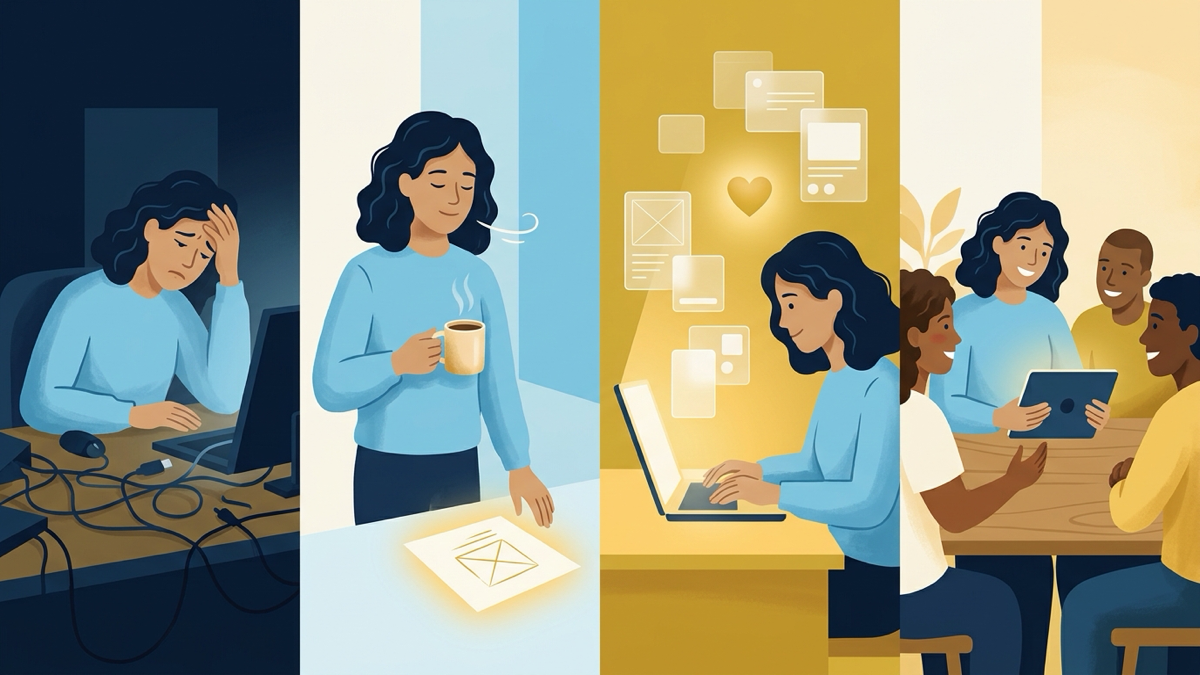
Traditional Barriers vs. Human-Led Creation
Conclusion
The future of creation is not about making humans more like machines. It is about using technology to make more room for what makes us human.
Our imagination, our experiences, our ability to care, and our understanding of the people around us are not obstacles that technology must overcome. They are the very reasons we create.
AI can expand our possibilities. But it is our humanity that helps us decide which possibilities are worth pursuing.
When we pair that creative power with warm mentorship—as Creative Code does every week—we remind people of something they carried all along: their ideas matter, and they have what it takes to bring them to life.
Continue Reading
At Link Foundation, we believe technology should feel like an open door—never a locked room.
Pause for a moment today and ask yourself: If building were no longer the hard part, what dream for your work or community would you start shaping this week?
Continue reading: In the age of enhanced creativity, we still have the reins
That reflection walks hand in hand with this story—exploring why human imagination still leads every tool we touch. You can also read Why Access to AI Tools Is the New Civil Right? to see why fair access shapes opportunity for everyone.
References
Sweet, J. (2026, April 1). ‘Vibe coding’ may offer insight into our AI future. The Harvard Gazette. https://news.harvard.edu/gazette/story/2026/04/vibe-coding-may-offer-insight-into-our-ai-future/
Sarkar, A., & Drosos, I. (2025). Vibe coding: programming through conversation with artificial intelligence. arXiv:2506.23253. https://arxiv.org/abs/2506.23253
Vibe coding. (2025). Wikipedia (Andrej Karpathy's February 2025 framing and Collins English Dictionary's 2025 Word of the Year). https://en.wikipedia.org/wiki/Vibe_coding
Link Foundation. (2025, December 10). In the age of enhanced creativity, we still have the reins. https://linkfoundation.io/post/human-vs-ai-creativity
Link Foundation. (2025, October 17). Why Access to AI Tools Is the New Civil Right? https://linkfoundation.io/post/ai-access-as-civil-right